
Overview
About This Condition
Age-related macular degeneration, often called AMD, is a condition that affects the macula, the part of the retina responsible for sharp central vision. Central vision is used for reading, recognizing faces, driving, and seeing fine details.
AMD can affect one or both eyes. Some people notice mild changes over time, while others may experience more significant vision loss. AMD usually does not cause complete blindness because side vision is often preserved, but it can make daily visual tasks more difficult.
There are two main forms of AMD: dry AMD and wet AMD. Dry AMD is more common and often progresses slowly. Wet AMD is less common but can cause more rapid vision changes when abnormal blood vessels grow beneath the retina and leak fluid or blood.
Early Recognition
Protecting Central Vision Starts With Understanding the Signs
Symptoms
Blurry central vision
Distorted vision, such as straight lines appearing wavy
Dark or blank spots in central vision
Difficulty reading
Trouble recognizing faces
Difficulty seeing fine details
Vision changes in one or both eyes
Needing brighter light for close-up tasks
Risk Factors
Increasing age
Family history of AMD
Smoking
Cardiovascular disease
Poor diet or limited intake of eye-supporting nutrients
Light-colored eyes
Long-term sun exposure
Diagnosis
How This Condition is Diagnosed
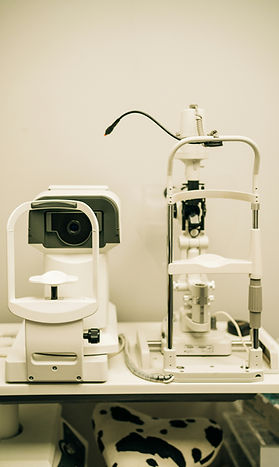
AMD is diagnosed through a comprehensive eye examination. The doctor may examine the retina and macula and may use imaging tests to evaluate the health of the back of the eye.
Early diagnosis is important because AMD can progress over time. Regular monitoring allows the doctor to watch for changes and recommend treatment or supportive care when appropriate.
Treatment plans vary by patient and condition. Consult with your eye care specialist for personalized recommendations.
Treatment
Treatment Options
Treatment depends on the type and severity of AMD.