772.287.9000 Stuart
772.287.9000 Stuart
772.287.9000 Stuart

Overview
About This Condition
Macular degeneration is an eye condition that affects the macula, the central portion of the retina responsible for sharp, detailed vision. Most commonly associated with aging, age-related macular degeneration (AMD) typically affects adults over 50 and can make everyday activities such as reading, driving, and recognizing faces increasingly difficult.
There are two main types of macular degeneration: dry and wet. Dry macular degeneration is the more common form and develops when cells in the macula gradually deteriorate, leading to progressive central vision loss. Wet macular degeneration occurs when abnormal blood vessels grow beneath the retina and leak fluid or blood, potentially causing rapid and significant vision changes.
Symptoms may include blurred or distorted central vision, difficulty seeing fine details, and dark or empty spots in the center of your visual field. While peripheral (side) vision generally remains unaffected, damage to central vision can significantly impact daily activities and independence.
Although there is currently no cure for macular degeneration, early detection and appropriate management can help slow its progression and preserve remaining vision. Treatment depends on the type and severity of the condition and may include nutritional supplements for certain stages of dry macular degeneration or medication injections for wet macular degeneration.
Regular comprehensive eye examinations are essential for identifying early changes in the macula, monitoring disease progression, and determining the most appropriate treatment plan. With timely diagnosis and ongoing care, many individuals with macular degeneration can maintain their remaining vision and quality of life.
Macular Health
Understanding Macular Degeneration Symptoms and Risk Factors
Symptoms
Symptoms of macular degeneration vary depending on whether the condition is wet or dry. Both affect central vision, but they often progress differently.
Wet Macular Degeneration
Symptoms may develop rapidly and include:
Blurred central vision: Sudden blurriness or difficulty seeing fine details.
Distorted vision: Straight lines may appear wavy, bent, or crooked.
Central blind spots: Dark or empty areas may appear in the center of your vision.
Rapid vision changes: Noticeable deterioration in central vision over a short period.
Dry Macular Degeneration
Symptoms typically develop gradually and include:
Blurred central vision: Increasing difficulty seeing objects or fine details clearly.
Gradual vision loss: Slowly worsening central vision over time.
Difficulty with daily activities: Reading, driving, or recognizing faces may become more challenging.
Reduced vision in low light: Difficulty seeing or adjusting to dim lighting.
Important: Any new or sudden changes in central vision should be evaluated promptly by an eye care professional, as they may indicate progression to wet macular degeneration.
Risk Factors
Age: The risk of macular degeneration increases with age, particularly after age 50.
Family history: Having a relative with macular degeneration increases your risk.
Race and ethnicity: Caucasians are more likely to develop age-related macular degeneration than other racial groups.
Smoking: Tobacco use significantly increases the risk of developing macular degeneration.
High blood pressure: Hypertension may contribute to the development and progression of the condition.
High cholesterol: Elevated cholesterol levels may be associated with an increased risk of macular degeneration.
Diagnosis
How This Condition is Diagnosed
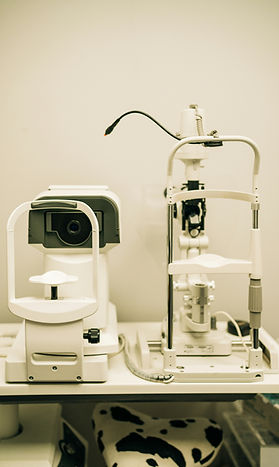
Macular degeneration is diagnosed through a comprehensive eye exam by an eye doctor. During the exam, your doctor will carefully examine your retina and ask about your symptoms. Additional tests, such as the Amsler grid test, may be used to detect vision changes that indicate macular degeneration. Early diagnosis is key, as it allows for timely intervention to slow the progression of the disease and preserve as much vision as possible.
Treatment
Treatment Options
Treatment plans vary by patient and condition. Consult with your eye care specialist for personalized recommendations.
Treatment for age-related macular degeneration (AMD) depends on whether the condition is dry or wet and how far it has progressed. While some treatments help slow disease progression, others focus on controlling abnormal blood vessels and preserving vision.
Advanced Imaging & Monitoring
Regular eye examinations and advanced imaging, including Optical Coherence Tomography (OCT) and wide-field retinal imaging, help monitor changes in the retina and guide treatment decisions.
Wet AMD Treatments
Anti-VEGF Injections: Medications injected into the eye help reduce abnormal blood vessel growth and leakage, preserving vision and, in some cases, improving it.
Treatment options may include Eylea®, Eylea® HD, Lucentis®, Vabysmo®, and Avastin®.
Dry AMD & Geographic Atrophy Treatments
Geographic Atrophy Injections: For certain patients with advanced dry AMD, medications such as Syfovre® and Izervay™ may help slow the progression of retinal damage.
Valeda® Light Therapy: Photobiomodulation therapy may be considered for eligible patients with dry AMD.
Nutritional & Lifestyle Guidance
Depending on the stage of AMD, recommendations may include evidence-based nutritional supplements, UV protection, smoking cessation, and other lifestyle adjustments to support long-term eye health.
Clinical Research
Participation in clinical research may be considered when appropriate, providing eligible patients with opportunities to explore emerging treatment approaches.
Treatment recommendations are individualized based on the type and severity of AMD, retinal health, and each patient's specific needs.